Available 24 hours / 7 Days a Week
Email: info@senftlegal.com
We'll review your delivery truck accident case at no cost to you, including answering any questions regarding the liable company's insurance policy. You'll understand your rights, possible outcomes, and the best course of action moving forward.
We’ll review your case at no cost to you, including answering any questions regarding your insurance policy. You’ll understand your rights, possible outcomes, and the best course of action moving forward.

We'll gather all necessary evidence, including medical records, witness statements, police reports, corporate fleet records, and driver employment status, to build a strong claim. Thereafter, we'll file a claim against the delivery company's insurance or the at-fault driver's employer.

Delivery companies like Amazon, FedEx, and UPS carry large commercial insurance policies. We know how to navigate corporate liability structures and negotiate aggressively. If a fair settlement isn't reached, we will take your case to trial.

We’ll work tirelessly to help you pursue compensation for medical bills, lost wages, and pain and suffering, so you can focus on moving forward with your life.

The first thing you should do immediately after a FedEx truck hits your car is to prioritize your own safety. Quickly and carefully navigate to a safe location nearby, if possible, and check yourself and any passengers for serious injuries. Call for emergency services if necessary. Then, begin documenting evidence of the crash—including damage to your vehicle, any physical injuries, and the scene where the accident occurred. Speak to the FedEx driver and record their name, license plate number, driver's license number, insurance information, and any other relevant information, as well as how to contact them. You should also file an Oregon DMV accident report and make an appointment with a medical provider to check for unseen injuries. Once these steps have been followed, the next recommended step is to contact a FedEx truck accident lawyer in Oregon, who can help you assess your case and prepare to pursue compensation.
In some cases, you may be able to sue Amazon if a delivery driver hit your car, but this should typically be saved as a last resort. If possible, it is better to go through insurance to claim compensation. Amazon requires or maintains liability insurance for its truck drivers according to national and state insurance laws. It's important to note that Amazon carries out delivery under a number of different services, including contracting with independent operators. That means liability and insurance may vary from case to case. If you are able to, make sure to request the driver's specific insurance details at the scene of the accident. We recommend working with an Amazon truck accident lawyer in Oregon, who can help you navigate the unique details of your specific case and assemble a claim to maximize compensation. If you can't reach a fair agreement with insurance, your attorney can also help you file a lawsuit and fight for your compensation in court.
Yes, but the specific coverage depends on the driver's employment status and the type of vehicle. Amazon requires its Delivery Service Partners to carry commercial auto liability insurance, typically with limits around $1 million. For Amazon Flex drivers, Amazon provides commercial coverage up to $1 million through its insurer, but only while the driver is actively on a delivery block (after package pickup through completion of deliveries). Coverage gaps can exist between delivery blocks or if the driver made an unauthorized detour. FedEx Express drivers are generally direct employees covered by FedEx's corporate insurance. FedEx Ground drivers often work as independent contractors with separate commercial policies. Under federal law (49 CFR Part 387), for-hire carriers operating vehicles with a gross vehicle weight rating (GVWR) of 10,001 pounds or more must carry a minimum of $750,000 in liability coverage for non-hazardous cargo. Many major freight brokers and shippers require carriers to carry $1 million to $2 million. Because the name on the side of the van doesn't always match the entity on the insurance policy, identifying the correct active policy requires careful investigation.
Delivery truck accidents introduce additional layers of complexity that standard car accident claims don't have. First, there are multiple potentially liable parties: the driver, the delivery company that employed them, the corporate brand whose packages were aboard (e.g., Amazon), the vehicle owner or leasing company, and potentially maintenance vendors. Second, the driver's employment status matters. Under Oregon law, employers can be held vicariously liable (respondeat superior) for negligent acts committed by employees, but generally not for independent contractors, unless the company was negligent in hiring, supervision, or safety practices. Third, unique types of evidence exist in these cases: GPS and telematics data, delivery route records, scanner data, driver qualification and training records, dash camera footage, and delivery app data. This evidence can disappear quickly, especially digital data that may overwrite on a schedule. Fourth, commercial insurance structures are more complex, potentially involving multiple overlapping policies. An experienced attorney can send an early evidence-preservation letter and investigate each layer of liability and coverage.
Under ORS 12.110(1), Oregon law generally gives you two years from the date of the accident to file a personal injury lawsuit. This deadline applies strictly: filing even one day late can result in dismissal. There are limited exceptions. If the injured person is a minor, the filing window may be tolled until they turn 18. If the injury was not immediately apparent, Oregon's discovery rule may allow the clock to start on the date you discovered or reasonably should have discovered the injury, though courts apply this narrowly. For wrongful death claims, the deadline is generally three years from the date of the injury causing death (ORS 30.020). Important: if a government vehicle or agency was involved in the accident, you must file a notice of claim within 180 days. Acting quickly also matters because corporate fleet records, driver logs, GPS data, and delivery app records may not be retained indefinitely. An early evidence-preservation letter can prevent critical records from being destroyed.
Our delivery truck accident lawyers work on a contingency fee basis, meaning you pay nothing upfront and owe no fees unless we win your case. Our fee is a percentage of the settlement or verdict awarded, typically ranging from 33% to 40% depending on the complexity of the case and whether it goes to trial. There are no hourly charges, no retainers, and no hidden costs. This structure allows you to pursue your case with experienced legal representation regardless of your financial situation.
Yes, a delivery truck accident lawyer may be able to help in an accident involving catastrophic injuries. Because these cases can involve serious long-term implications, such as disability, lost wages, and impact on overall quality of life, a lawyer's assistance may be crucial in accurately assessing the compensation you are eligible for. Delivery truck accident lawyers are also experienced at handling the complex liability questions that can arise when dealing with commercial truck accident cases in Oregon.
Yes. Senft Legal helps injured delivery truck accident victims throughout Oregon, including Portland, Eugene, Bend, Salem, Corvallis, and nearby communities. Our team can review your claim, identify all potentially liable parties and insurance policies, and help you pursue compensation for medical bills, lost wages, pain and suffering, and other damages.
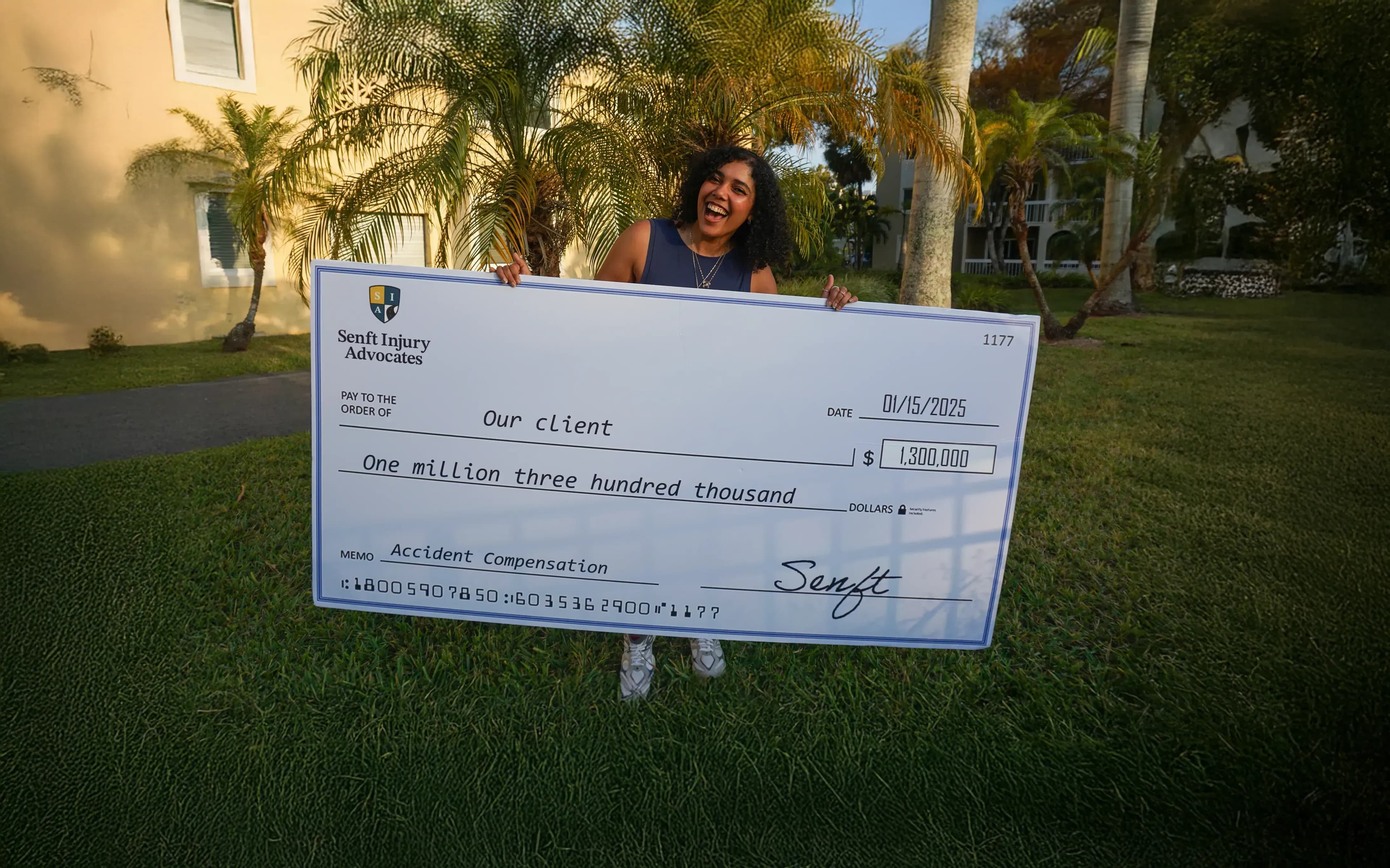
Results may vary depending on your particular facts and legal circumstances.
If You're Injured and Not At-Fault, Your Settlement Is Waiting. Get Compensated For Medical Bills, Time Off Work, & More.