Available 24 hours / 7 Days a Week
Email: info@senftlegal.com
We'll review your truck accident case at no cost to you, including answering questions about the trucking company's insurance, federal safety regulations, and the compensation you may be entitled to. Whether you were hit by a semi, 18-wheeler, Amazon truck, U-Haul, garbage truck, or any commercial vehicle, we can help.
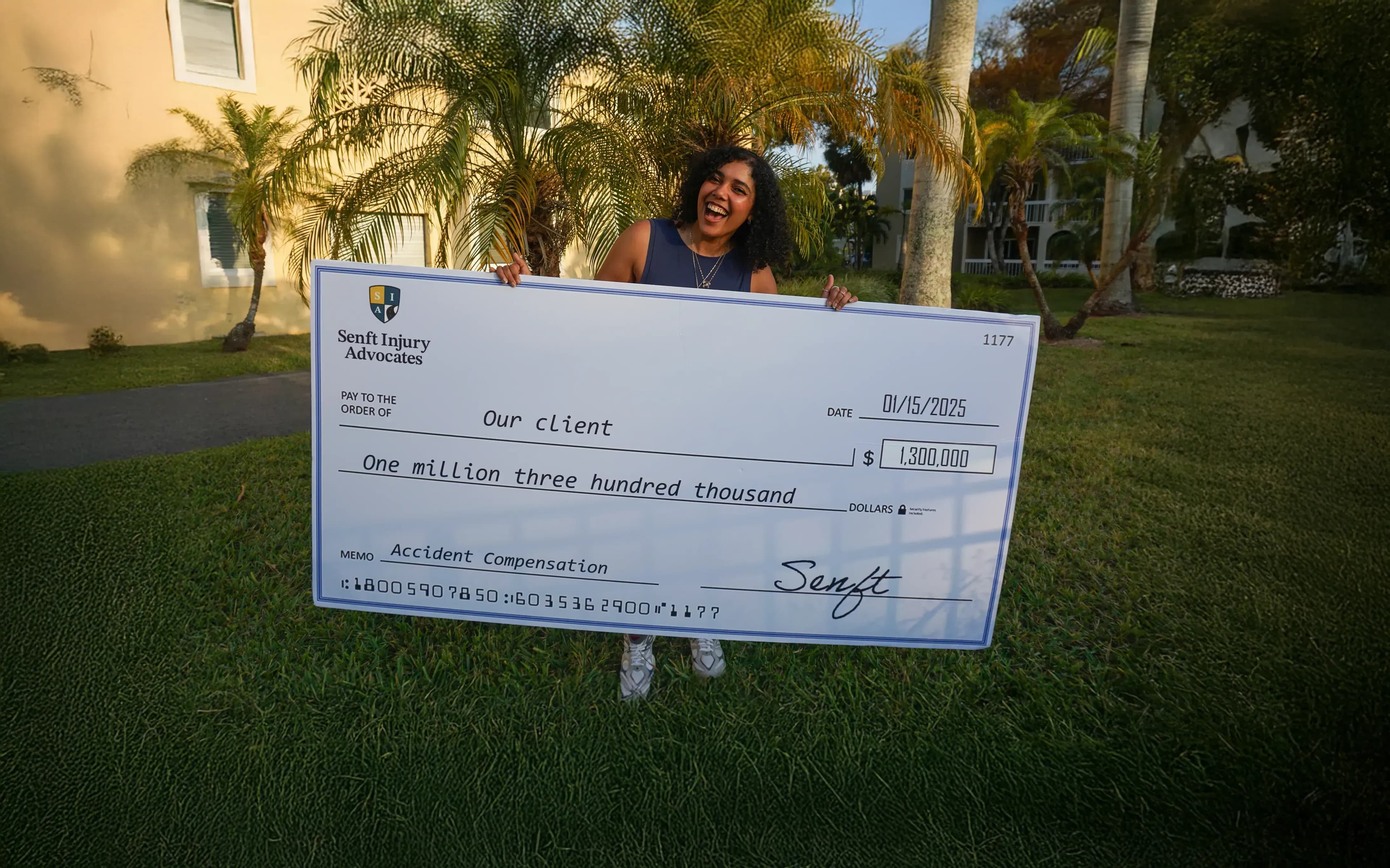
Results may vary depending on your particular facts and legal circumstances.
If You're Injured and Not At-Fault, Your Settlement Is Waiting. Get Compensated For Medical Bills, Time Off Work, & More.

We'll review the details of your truck accident and explain your legal options. Truck accidents involve larger insurance policies, multiple potentially liable parties, and federal regulations that don't apply to standard car accidents. We'll tell you what your case is worth.

We'll gather all necessary evidence, including medical records, witness statements, police reports, driver logs, maintenance records, black box data, and corporate fleet records. We'll send immediate preservation demands to the trucking company before critical evidence is destroyed. If a company truck hit you, we'll investigate the employer's liability and identify every available insurance policy.

Trucking companies and their insurers fight hard. They deploy rapid-response teams and experienced adjusters immediately after a crash. We match that intensity. We negotiate aggressively and know how to use FMCSA violations, driver qualification records, and hours-of-service data as leverage. If a fair settlement isn't reached, we take your case to trial.

Medical bills, lost wages, pain and suffering, and any long-term rehabilitation. Truck accidents cause some of the most catastrophic injuries on the road. We fight for compensation that reflects the true impact on your life.

Call 911 and get medical attention immediately. Truck accidents often cause severe or catastrophic injuries. If you're able, document the scene: photos of all vehicles (including the truck's company markings, unit number, and license plate), road conditions, skid marks, and your injuries. Get the truck driver's name, employer, insurance information, and CDL number if possible. If the accident caused injury, death, or over $1,000 in property damage, it must be reported to the Washington State Patrol within 4 days if police didn't file a report at the scene. Do not give a statement to the trucking company's insurance or rapid-response team. Contact a truck accident lawyer immediately. Evidence in truck cases (driver logs, GPS data, black box data, maintenance records) can be overwritten or destroyed quickly.
Multiple parties may share liability. The truck driver may be liable for negligent driving, but the trucking company can also be held responsible under respondeat superior (employer liability) for their driver's actions within the scope of employment. The company may also be directly liable for negligent hiring, inadequate training, unrealistic delivery schedules, or failure to maintain the vehicle. If the truck was leased, the vehicle owner or leasing company may share liability. If a mechanical failure caused the crash, the manufacturer or maintenance vendor may be responsible. Under FMCSA regulations (49 CFR Part 387), for-hire carriers with vehicles over 10,001 lbs GVWR must carry at least $750,000 in liability insurance for non-hazardous cargo, and up to $5 million for hazardous materials.
It depends on the driver's employment status. Amazon uses Delivery Service Partners (DSPs), which are independent contractor companies that hire their own drivers. Amazon also uses Flex drivers (gig workers using personal vehicles). Whether Amazon is liable depends on how much control they exercised over the driver, route, and schedule. Washington courts look at the real working relationship, not just the contract label. Amazon DSPs are typically required to carry commercial auto liability insurance around $1 million. Amazon Flex drivers are covered by Amazon's $1 million policy during active deliveries. An experienced truck accident attorney can investigate the driver's specific arrangement and pursue all liable parties.
U-Haul and other rental truck companies carry commercial insurance, but the coverage structure can be complex. The driver who rented the truck may have purchased supplemental insurance through U-Haul, or they may be relying on their personal auto policy (which may not cover rental trucks). U-Haul maintains fleet liability insurance, but the available coverage depends on the specific rental agreement. Additionally, if the driver was operating the truck for a business purpose (e.g., a company move), their employer's commercial insurance may also apply. An attorney can investigate all available policies.
Garbage trucks are typically operated by municipal waste services or private waste companies under government contracts. If it's a city or county garbage truck, you may be filing against a government entity, which in Washington requires filing a tort claim before suing and waiting 60 days (RCW 4.96.020). If it's a private waste company (e.g., Waste Management, Republic Services), you're dealing with their commercial insurance. Either way, commercial trucks carry significantly larger insurance policies than personal vehicles. Washington's three-year statute of limitations still applies (RCW 4.16.080), but acting quickly preserves evidence like dash cam footage, route logs, and vehicle inspection records.
Yes. Washington follows pure comparative negligence (RCW 4.22.005), so you can recover damages even if you were 99% at fault. Your award is reduced by your percentage of fault. There is no bar threshold like Oregon's 51% rule. Insurance companies for trucking companies aggressively try to shift blame onto the other driver. Having an experienced attorney counter these arguments protects your recovery.
Medical expenses (past and future), lost wages and lost earning capacity, property damage, pain and suffering, emotional distress, scarring and disfigurement, and loss of enjoyment of life. Truck accidents cause disproportionately severe injuries due to the size and weight differential. Washington has no cap on noneconomic damages (Sofie v. Fibreboard Corp., 1989). Because commercial trucks carry larger insurance policies ($750,000 to $5 million depending on cargo), the available compensation pool is often significantly larger than in a standard car accident.
Three years from the date of the accident (RCW 4.16.080). If a government vehicle was involved, you must file a tort claim first and wait 60 days (RCW 4.96.020). Don't wait. Trucking companies preserve evidence on their own timelines, not yours. Driver logs, black box data, GPS records, and maintenance files can be overwritten or destroyed within weeks.
Our truck accident lawyers work on a contingency fee basis. You pay nothing upfront and owe no fees unless we win. Our fee is typically 33% to 40% of the settlement or verdict. No hourly charges, retainers, or hidden costs.
Senft Legal helps truck accident victims throughout Washington state, including Seattle, Tacoma, Spokane, Everett, Bellevue, Vancouver, and communities across the state. Whether your accident happened on I-5, I-90, I-82, Highway 2, or a local road, our team can review your claim and help you pursue maximum compensation.