
Available 24 hours / 7 Days a Week
Email: info@senftlegal.com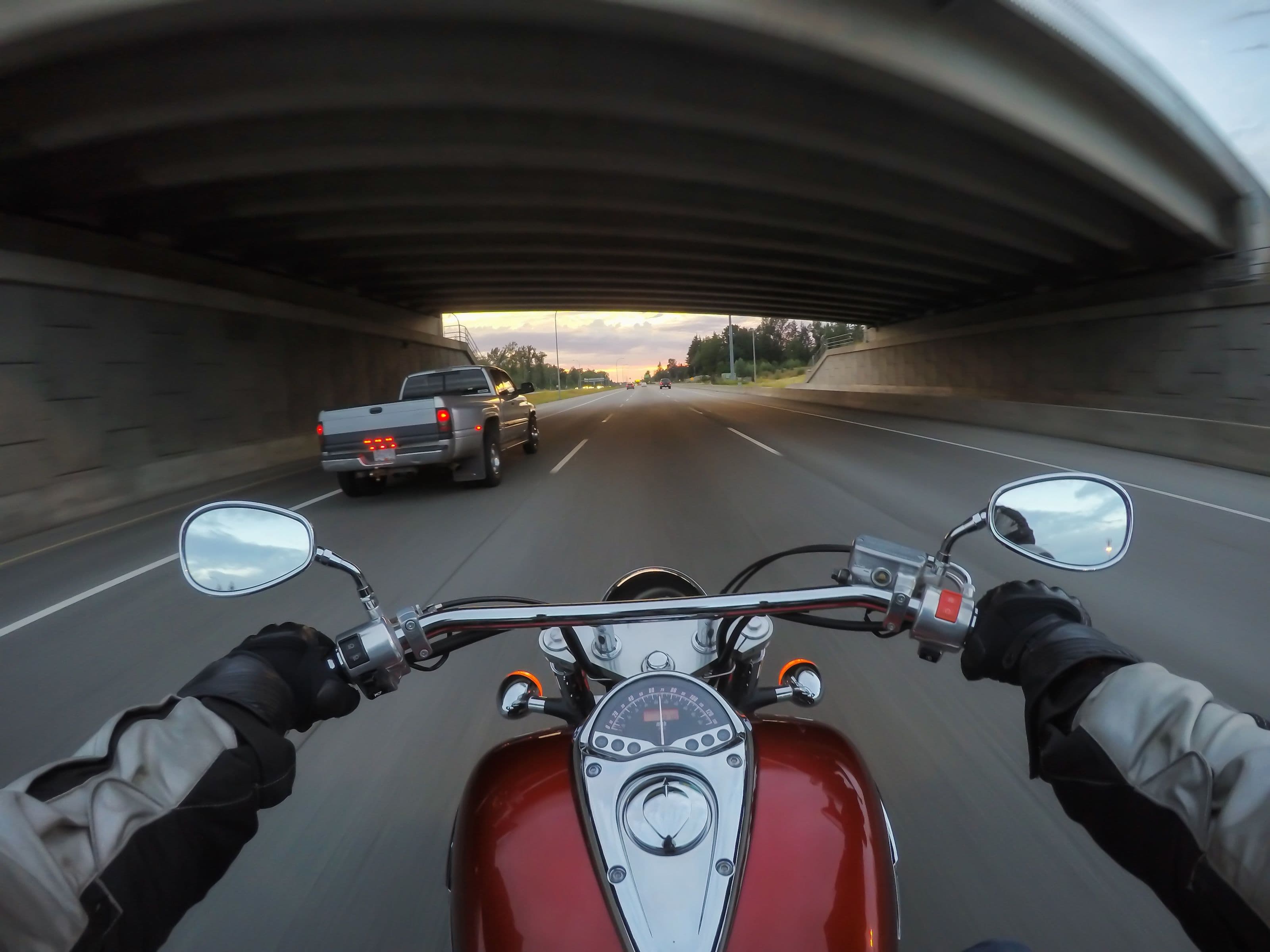
In Washington state, motorcyclists account for 16% of traffic fatalities in Washington, despite making up only 3% of total traffic accidents in the state, according to the state traffic safety commission. Amidst discussions over how to protect motorcyclists as vulnerable road users, one of the most controversial topics is that of lane splitting, a practice in which motorcyclists travel in between traffic lanes, passing other vehicles in the process.
Lane splitting carries different perceived risks and benefits depending on factors like the speed of traffic, the behavior of nearby drivers, and basic road conditions. Some are firm proponents of the practice as a safety measure, others oppose it entirely, and many fall somewhere in the middle. The continued debate has somewhat obscured the simple matter of whether splitting lanes is even legal in Washington in the first place.
So before discussing any further, let’s take a look at exactly what the law says.
No, lane splitting is not legal in Washington state, under any circumstances.
State law is clear about this—RCW 46.61.608, subsection 3 reads, “No person shall operate a motorcycle between lanes of traffic or between adjacent lines or rows of vehicles.”
In spite of this, some motorcyclists continue to pass vehicles between lanes in what they perceive to be safe situations. One major example of this is lane filtering, a form of lane splitting which takes place in stopped traffic (as opposed to passing moving cars).
No, lane filtering is not legal in Washington state. Washington state law makes no exceptions for lane splitting, including in stopped traffic.
Yes, lane splitting can affect accident liability. Because state law explicitly prohibits motorcycles from traveling in between lanes, getting into an accident while lane splitting could leave a motorcyclist with a higher percentage of fault.
However, this does not necessarily mean that a motorcyclist is always primarily at fault for an accident involving lane splitting. If other involved drivers behaved negligently, (such as through distracted or aggressive driving, improper lane change, speeding, etc.), then they will also bear some amount of responsibility.
In a lane splitting accident in Washington state, both parties are potentially eligible for compensation. Washington is a pure comparative negligence state, meaning even if you are partially at fault, you can still recover compensation. However, your total compensation amount will be reduced by the percentage of fault you bear in the accident.
The primary argument in favor of lane splitting is that it gives motorcyclists an escape route so they don’t end up trapped between larger vehicles. Because motorcycles are smaller, some drivers, especially distracted drivers, might not see them in time to brake smoothly. The risk of being rear-ended is bad enough, but if the motorcycle is trapped behind a second vehicle, the situation can become even more dire.
Lane splitting, and especially lane filtering, are intended to solve this problem by allowing motorcycles to pass slower-moving traffic even if they can’t get over all the way into the next lane.
Perspectives on the safety of lane splitting are divided. While some believe it is the key to protecting motorcyclists from dangerous situations, others fear it makes the road more dangerous for everyone.
One study from the University of California Berkeley found that lane splitting motorcyclists are at a lower risk of getting rear-ended, especially in slower moving traffic and when traveling at reasonable speeds.
However, there is not yet enough evidence to suggest that permitting lane splitting directly leads to safer roads for motorcyclists or for other motorists. In fact, the same study found that lane splitting motorcyclists are more likely to rear end other vehicles themselves.
Additionally, many drivers on the road, especially those unfamiliar with the practice of lane splitting, may not know how to react if a motorcycle suddenly accelerates past them without fully changing lanes—that panic can lead to dangerous situations on its own.
Washington motorists have a legal responsibility to prioritize the safety of both themselves and others. Below are a few of our recommendations for how to minimize the risk of lane splitting accidents, for the sake of both motorcyclists and non-motorcyclists.
Note that safe driving involves careful attention to your surroundings and adapting when necessary. The following recommendations serve as gentle guidelines, but it is always important to maintain situational awareness and avoid causing unnecessary harm to others, to the best of your ability.
Splitting lanes is not legal in Washington, under any circumstances. Without a legal foundation to ensure safe practice, engaging in lane splitting can create dangers of its own, and leave you liable in the event of an accident.
To protect your own safety, always wear the proper protective gear, including a helmet and clearly visible clothing. On the road, mind your following distance behind other vehicles, so you have room to maneuver out of harm’s way if necessary.
Remain alert and attentive on the road at all times, keep a safe following distance behind any and all vehicles, and travel according to posted speed limits. Always signal and check your blind spot before changing lanes.
In the event that a motorcycle attempts to illegally pass you by lane splitting, remain calm and continue traveling in your lane. Do not attempt to block them from passing. Though lane splitting is illegal in Washington, you still have a responsibility to avoid causing unnecessary harm to other vehicles, even if they are acting unlawfully. Failing to meet this responsibility could leave you partially at fault in the event of a collision, reducing the compensation you can receive.
By putting safety first every time they get on the road, Washington drivers can help reduce the dangers faced by motorcyclists and better avoid preventable traffic accidents. All the same, accidents do happen. If you have been injured due to somebody else’s negligence, reach out to an Oregon motorcycle accident attorney today for critical legal support in pursuing compensation.